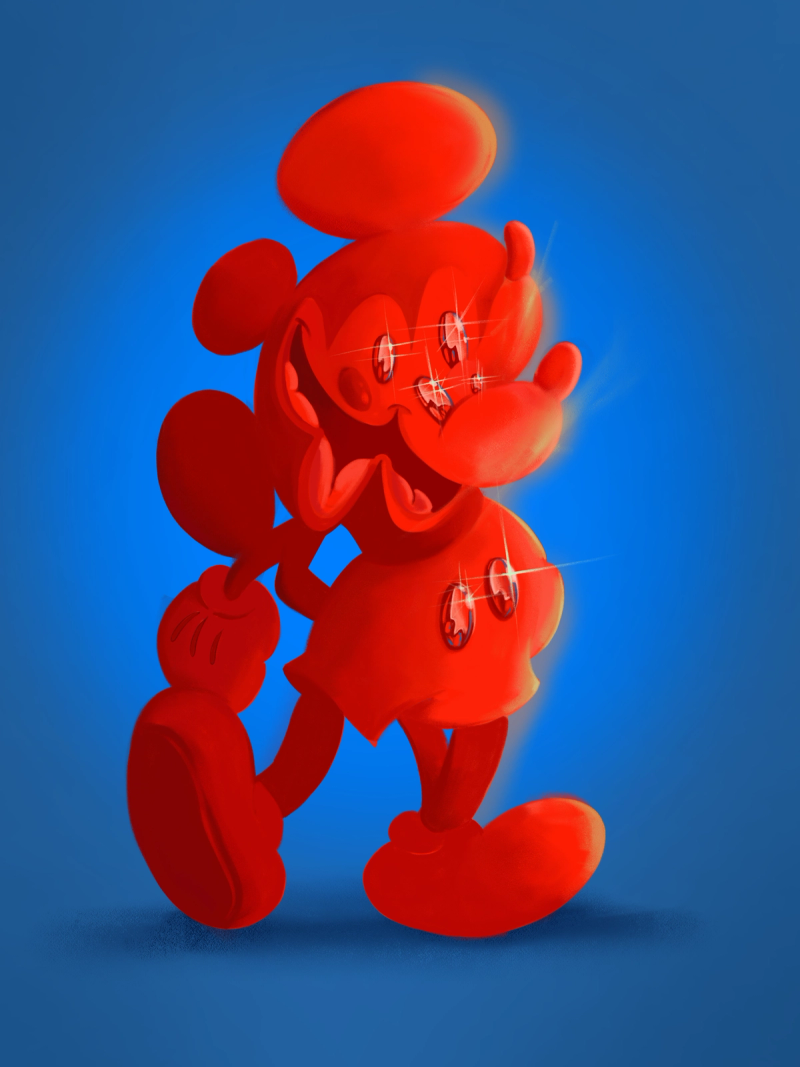
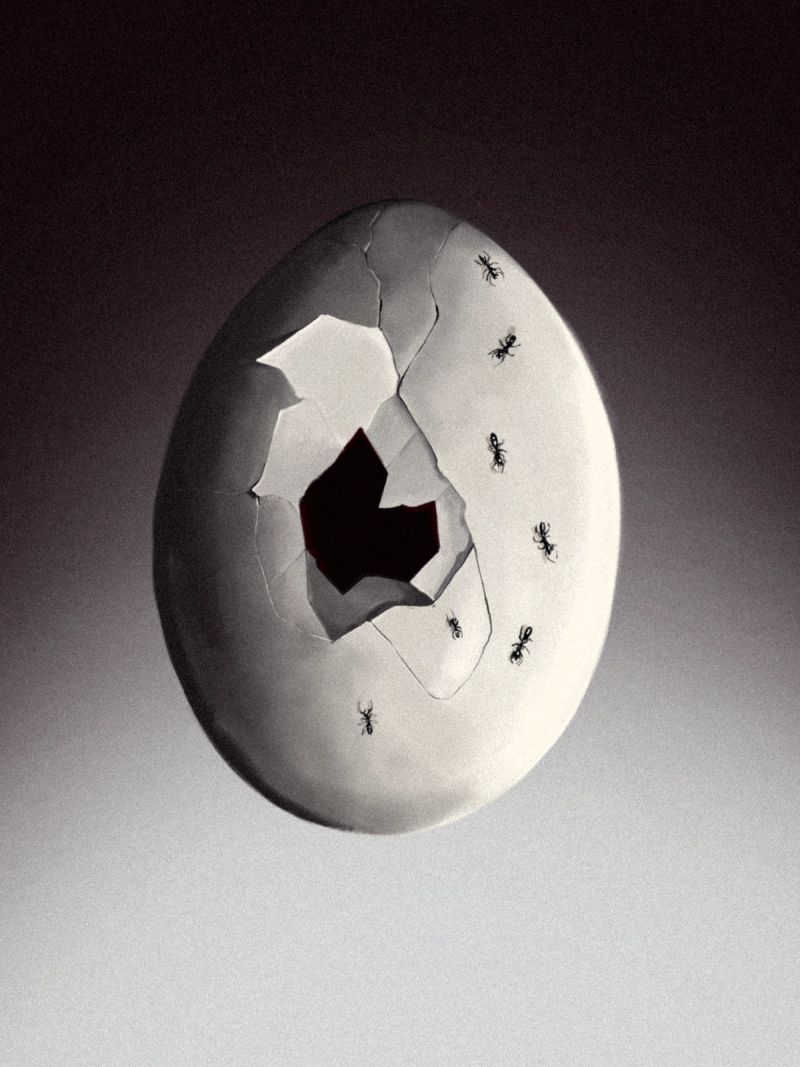
Written by: Aidan Larned (strategist) & Michael Whitham (senior creative)
Helium 11: The Empathy Gap

Written by: Aidan Larned (strategist) & Michael Whitham (senior creative)
In San Francisco, the most coveted personality trait is no longer intelligence. It is "agency." As Sam Kriss reports in Harper's, tech candidates are now asked in interviews whether they are "mimetic" or "agentic." You do not want to say mimetic. The agentic don't wait for permission or consensus: they just do things. They bulldoze through whatever is in their way. What will matter, the argument goes, is the ability to act decisively and without looking back.
Marc Andreessen made this philosophy explicit on David Senra's podcast. His goal, he said, is "zero" introspection. "As little as possible. Move forward. Go." This is not an outlier position. But a bulldozer mentality and a refusal to examine your own interior life tend to erode something else: the capacity to imagine anyone else's. If you have no interest in understanding yourself, it is difficult to understand other people. Elon Musk has taken this trajectory to its endpoint, calling empathy "the fundamental weakness of Western civilization," something to be eliminated. As Noah Hawley observes in The Atlantic, when your environment stops pushing back, the capacity to see others as anything other than instruments quietly atrophies. Is this the operating system of the people funding the future?
Kriss's profile of Roy Lee, co-founder of the A.I. startup Cluely, is a portrait of what this philosophy produces. Lee is nothing if not agentic. He describes an "internal, indescribable fury" when anyone tells him what to do. He raised tens of millions and moved to San Francisco before turning twenty-one. When asked about literature, he says flatly: "I do not obtain value from reading books." When asked about music, he explains that its only functions are "focus and hype." These are not minor admissions. Literature and music exist, at the most basic level, to expand our capacity for empathy, to connect us to human experience beyond our own. A book is, as Ben Lerner recently described it, "a channel opened between the compositional moment and the moment in which I'm reading." Lee has no use for that channel.
A.I. makes competent-looking creative work cheaper and faster to produce than ever, without any requirement for empathy. "Slop" was named Merriam-Webster's Word of the Year for 2025, describing the flood of A.I.-generated content that now accounts for up to a third of what surfaces online. The properties of slop are the properties of forgettable work in any medium: superficially competent, effortlessly produced, indistinguishable from everything around it. But as the philosopher Rebecca Newberger Goldstein argues, even a perfect forgery is less valuable than the original, because what we respond to in creative work is the subjectivity behind it: the fact that a specific person wrestled with something and made a choice. A.I. can produce the surface but it cannot produce the value that comes from its origin.
Author Iris Murdoch defined the opposite of this condition: "a just and loving gaze directed upon an individual reality," the difficult work of truly seeing another person for what they are. Byung-Chul Han's The Agony of Eros warns what happens when that capacity disappears: everything is smoothed into sameness, and a tool that predicts what you want to hear becomes a tool for never having to understand anyone.
This matters for anyone in the business of making things that move people, because empathy is the mechanism by which people actually change. In 2008, California voted to ban gay marriage through Proposition 8. The Los Angeles LGBT Center, reeling from the defeat, decided to try something political operatives almost never do: go to the neighbourhoods that had voted against them and talk to the people who disagreed. Not to deliver talking points. To have real conversations. As This American Life reported, appeals to abstract principles did not work. What worked was more personal. The canvassers shared their own stories, asked the voters about theirs, and listened. When a voter mentioned a gay friend, the canvasser didn't pivot to policy. They asked what that friendship was like. A year later, voters who had spoken with gay canvassers had not reverted to their original positions.
The social psychologist Gordon Allport identified the conditions for this kind of change decades ago: equal status, cooperation, shared goals, and real presence. Brand work operates at a different scale, obviously. We are not knocking on doors. But the underlying principle holds: people are persuaded by empathy: that which feels human, specific, and honestly meant. They are not persuaded by what feels generated. A.I. and digital interfaces strip out every one of Allport's conditions. There is no shared vulnerability, no presence. A chatbot can produce the words "I understand how you feel," but it cannot mean them, and people know the difference.
After over 18 years in business, we relaunched last week as Studio & Marie, with a renewed sense of purpose. We are interested in human authorship (even when it uses A.I. as a tool). We are interested in collaborative work, rooted in the care of a studio practice. Work rooted in empathy. So often our industry is chasing scale, but we remain committed to depth, to human creativity as a discipline. Without empathy, you can produce endlessly, but you cannot make anything that lasts.
Illustration by Fernando Monroy